
For decades, the standard website interface has been a monologue. A brand presents information—its story, its products, its value—and the user is expected to listen, navigate, and hopefully act. This one-way communication is now obsolete. The frontier of exceptional digital experience is Conversational UX: a philosophy and practice dedicated to turning your website into a dialogue. This approach uses interactive, responsive design patterns to mimic natural human conversation, creating interfaces that are intuitive, engaging, and profoundly more effective at understanding and meeting user needs.
The End of the Static Page: From Presentation to Interaction
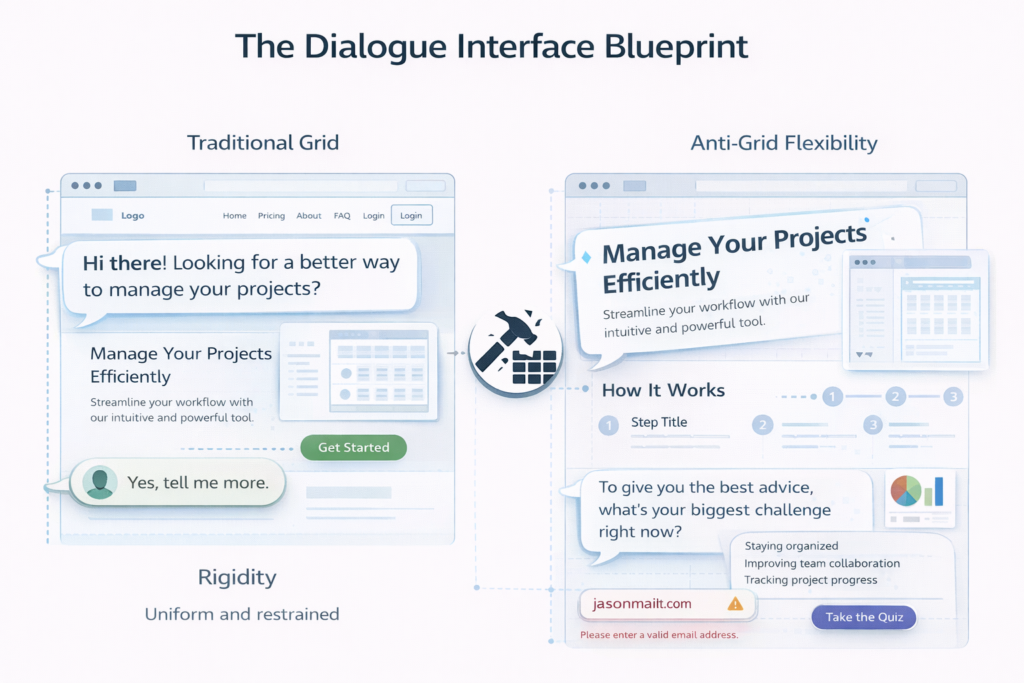
Traditionally, websites have been built like digital brochures. However, user expectations have been reshaped by messaging apps, smart assistants, and chatbots. Consequently, people now crave interactive, personalized exchanges, even with static websites. Therefore, Conversational UX is not merely about adding a chat widget; it is a fundamental rethinking of the user journey as a two-way exchange. This paradigm shift means every click, hover, and scroll can be framed as part of an ongoing conversation between the user and the interface.
Principles of Dialogue: The Mechanics of Conversation
Implementing Conversational UX requires designing interfaces that listen, comprehend, and respond. Essentially, it applies the core tenets of human conversation to visual design and interaction logic.
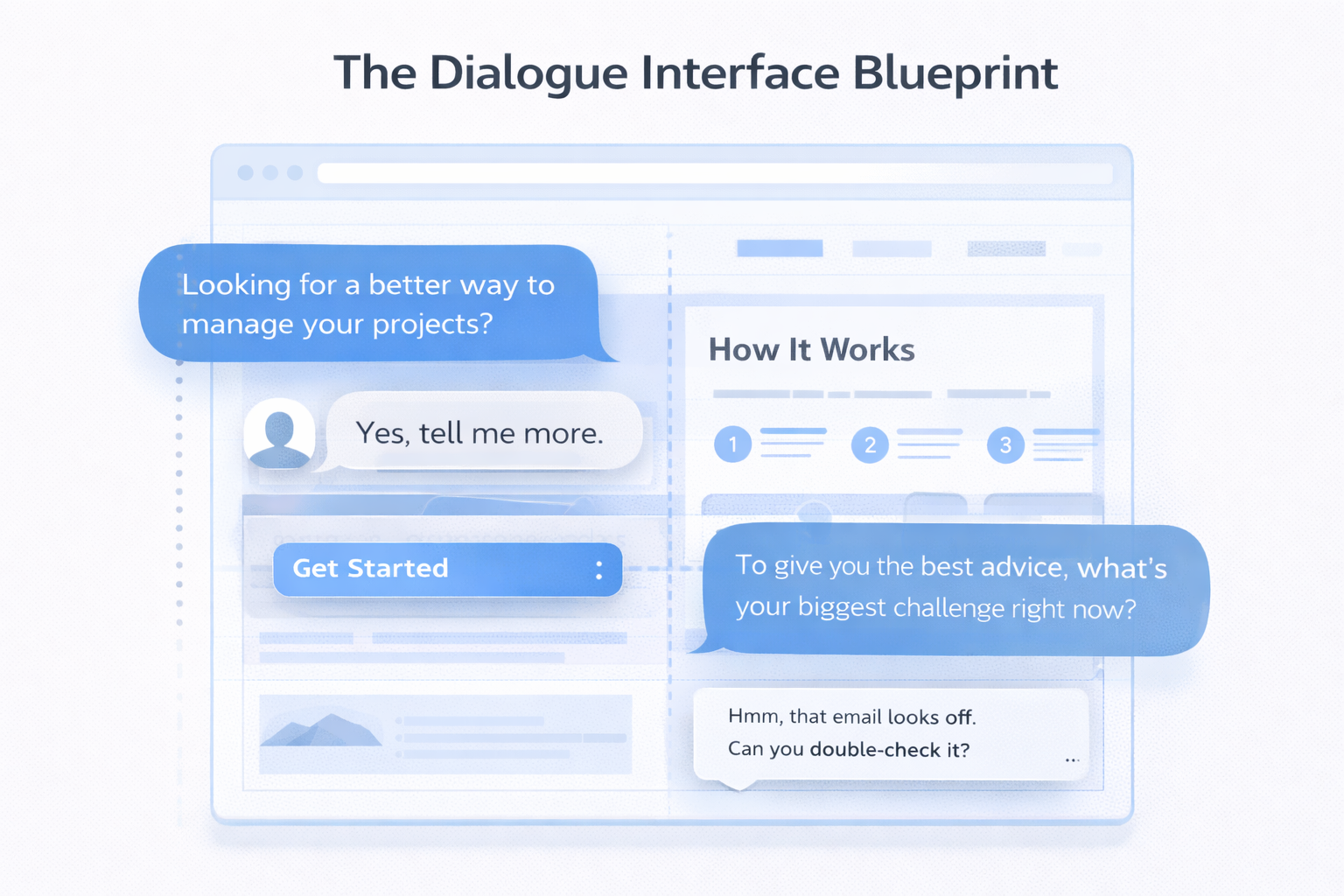
- Progressive Disclosure as Turn-Taking: A good conversation doesn’t overwhelm with information. Instead, the interface should reveal information progressively, like a natural dialogue. Thoughtful tooltips, expandable accordions, and step-by-step forms act as the system’s “turn,” providing just what’s needed next in response to the user’s “turn” (a click or selection). This reduces cognitive load and guides the user gently toward their goal.
- Microcopy as Tone of Voice: Every button label, error message, and placeholder text is a line in your script. Rather than generic commands like “Submit,” conversational microcopy uses friendly, action-oriented language: “Send my quote,” “Yes, I want this!” or “Hmm, that password needs a number.” This personality-filled copy builds rapport and makes interactions feel less transactional and more human.
- Contextual Feedback as Active Listening: In dialogue, we nod and say “I see.” In Conversational UX, feedback is immediate and contextual. A form field might validate an email as it’s typed; a loading animation might playfully say “Gathering your results…”; a success message might celebrate a completed action. These small acknowledgments make the user feel heard and understood, confirming their actions have been registered.
- Choice Architecture as Guided Pathways: A conversation often involves asking guiding questions. Interactive choice selectors, personalized quizzes, and smart “recommendation engines” function as the website’s questions: “What brings you here today?” or “Which of these describes your goal?” By turning your website into a dialogue that asks and adapts, you create a dynamic, co-created journey unique to each visitor.
Building the Dialogue: A Strategic Implementation Framework
Adopting this mindset requires more than new components; it needs a cohesive strategy focused on user intent.
- Map Dialogues, Not Just User Flows: Re-imagine key user journeys as conversation scripts. What is the user’s opening question or need? How does the site greet and qualify that need? What are the potential branching paths? Scripting this exchange reveals opportunities for conversational interventions.
- Prioritize Clarity Over Cleverness: The dialogue must be intuitive. Use familiar conversational patterns and clear visual cues. A conversational interface that is confusing is like talking to someone who speaks in riddles—it creates frustration, not connection.
- Leverage AI & Smart Components Judiciously: While not every site needs a full AI chatbot, smart, component-level AI can power conversational features: a search that asks clarifying questions, a configurator that explains choices, or a helper that anticipates follow-up needs based on page context.
- Design for Emotional Resonance: A great conversation leaves a feeling. The tone—whether helpful, enthusiastic, or reassuring—should be consistent. The goal is for the user to finish their session feeling assisted, not just processed.
Conclusion: The Interface as an Engaging Partner
Ultimately, Conversational UX represents the evolution of the website from a passive repository into an active, empathetic participant. It acknowledges that users are not just visitors but partners in a collaborative process of discovery and problem-solving. By dedicatedly turning your website into a dialogue, you build deeper trust, dramatically improve usability, and create memorable experiences that stand out in a sea of static monologues. In the end, the most effective website isn’t the one that talks at you, but the one that talks with you.